You'll Never Guess This Robot Vacuum Lidar's Benefits
페이지 정보

본문
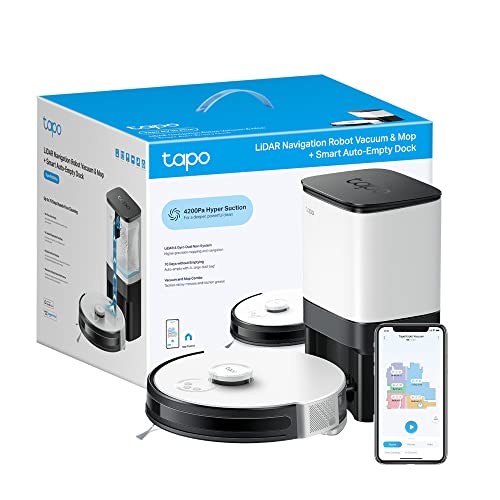 Lidar Technology Elevates Robot Vacuum Cleaners
The introduction of lidar sensor robot vacuum into robot vacuum cleaners has brought in a new era of intelligent and adaptable cleaning. Lidar allows navigation, obstacle avoidance, and optimized cleaning paths.
It works by emitting laser beams, and then measuring the time it takes them to reflect off objects before returning to the sensor. This information is used in order to create a map of the current surroundings.
Accuracy and Precision
Lidar technology has been a game-changer in the world of robot vacuum cleaners, transforming them to intelligent, adaptive household companions. It lets them navigate spaces with great precision and accuracy, allowing them to navigate efficiently and avoid obstacles without difficulty. In comparison to other navigation technology like cameras and gyroscopes, lidar offers superior performance and reliability.
The method of operation is straightforward: The robot's sensor emits a sequence of laser beams that reflect off of objects in the room. Based on the time it takes for these laser beams to return to the sensor, the robot is able to calculate the distance between itself and every object in the room. Then, it creates a real-time, detailed map of the surrounding. This is why Lidar-equipped robots, such as the TESLA Smart Robot Vacuum Laser the incredible abilities to detect obstacles, easily crossing low thresholds and avoiding stairs without missing a beat.
Once the robot has an overview of the entire space and can determine its cleaning path. This results in more efficient, thorough and systematic cleaning. Robots that do not use Lidar navigation follow the same pattern of cleaning, ping-ponging between areas.
However, like all technology lidar technology, it has its limitations. Some of the most significant issues are related to its ability to detect transparent or reflective surfaces, such as glass and mirrors. These surfaces can be mistaken as an obstacle-free area, which could cause the robot to slide over them, which could damage the table.
Another concern is the vulnerability of lidar to side-channel attacks like attacks that exploit the acoustic signals transmitted by the sensors. These attacks can be used for eavesdropping on private conversations, or to gather sensitive information like passwords and credit card numbers.
Overall, the advantages of lidar-equipped robots make them a good choice for anyone who wants to increase the cleanliness and ease of use. However, it's important to evaluate the pros and cons of each option before deciding on the one that best meets your needs.
Cleaning Strategies that are Adaptive
A robot vacuum cleaner has to be able navigate around obstacles while moving around your home. Lidar technology has enabled this, elevating robot vacuum lidar (https://panteonstar.com/bbs/board.php?bo_table=free&wr_id=16119) cleaners to become intelligent household companions rather than simple tools for cleaning. Consumers are increasingly selecting products with advanced navigation capabilities, recognizing the importance of precision, efficiency, and adaptability.
lidar robot is a tool for navigation that is compatible in conjunction with robot vacuums. Many of them are equipped with obstacle sensors. By studying the time it takes for laser pulses to bounce off objects before returning to the sensor, it is able to determine distance to nearby surfaces. This data allows it to alter its course in real-time in the event of a collision with an obstacle or wall.
Combined with vision sensors, which are able to see through reflective or opaque surfaces, Lidar can detect a larger range of surfaces and objects. It can also be used to help the robot avoid areas have already been cleaned. This ensures that every corner of your home gets its fair portion.
Other types of sensors may improve the navigation capabilities of a vac and also. Cameras can provide information that aids the device in recognizing objects and obstacles in its path. This information can assist the robot vacuum with lidar in navigating without danger, and avoid objects like toys or other fragile objects. Cameras can be used to establish virtual boundaries or "no-go zones" within a space, to ensure that the robot does not end up damaging furniture or objects.
In addition to obstacles, a robot must be able to detect floor patterns and changes in texture. This is done using vision sensors, which use a combination of cameras and algorithms to identify the position of features on surfaces. These sensors can then determine the floor plan of the area and generate maps that assist the robot to navigate more efficiently.
Other sensors that can improve a vacuum's navigation include the cliff sensors and obstacle detection. Cliff sensors are an essential security feature, as they prevent the robot from falling off stairs or other potentially hazardous surfaces. These sensors detect infrared light reflections from obstacles and can be detected on the vacuum's sensor. Infrared signals can be used for obstacle detection to detect obstructions in the ground. These signals are sent by the bumpers of the robot and trigger the vac to steer away from the object, and thus avoid the risk.
Mapping and Memory
When it comes to determining a robot vacuum's performance the straight-line tests for cleaning performance only tell part of the story. How well a robot navigates your space and determines its cleaning routes is crucial. This is the reason why a lot of buyers opt to invest in an item that has mapping capabilities and uses Light Detection and Ranging (lidar) technology.
Lidar-enabled robotics devices utilize spinning laser sensors to scan their surroundings and then create digital maps. They are able to detect walls, furniture and other objects, as well as their distance from the robot. Maps can be used to plan clean paths for cleaning.
These robots are able to create detailed maps for a single level or a multi-level home. They are also able to adapt to changing environments, like furniture moving or temporary obstacles. They also recognize a wide range of different objects and surfaces, including flooring made of hardwood, carpet and tiles. They may be unable to recognize dust, dirt or other small particles.
In addition to facilitating more efficient cleaning, lidar navigation can also reduce the amount of time required for robots to complete a task. It is possible to identify and navigate obstacles more precisely and result in shorter running times. A more precise map could also mean less redundant work and redundancy which can further cut down on running costs.
Lidar is not the only mapping technology that is available in robotic vacuums, but it is among the most advanced. Many models incorporate technologies like CVSLAM (ceiling-vision-based simultaneous mapping and location) with an upward-facing camera to see their surroundings. These systems are able to overcome the limitations of accelerometer-based mapping and gyroscopes, such as the inability to determine height and the presence of narrow obstacles such as bookcases.
Some robotic vacuums have a built-in computer memory that remembers the layout of your house, making it easier to use them without the need for a remote. They may also detect obstacles that are repeated and automatically adjust to keep them out of the way. This is especially helpful for pet owners. dirt that is difficult to distinguish from dirt and debris with sensor data.
Integration with Smart Home Ecosystems
Modern smart vacuum robots equipped with Lidar navigation systems can seamlessly integrate into your home's ecosystems. They are able to communicate with other connected devices, like your alarm system or smart bulbs for lighting. They can also make use of data analytics to continually improve their performance, by optimizing cleaning paths and adjusting to changing conditions. They can also be controlled with voice commands that allow you to use them without needing to pay attention.
This allows them to follow optimized cleaning routes that make the most efficient use of space covering all areas of an area with fewer unnecessary actions. This reduces battery energy and time, as well as ensuring that your living space is thoroughly cleaned.
Lidar-based robots are more efficient than models that are budget-friendly, which use the traditional bump-and-move method of navigation. This is because they don't consume energy by moving slight to the left or right to avoid obstacles as these robots defaultly do using their standard bump sensor. They can avoid obstacles with their precise mapping abilities which makes them more efficient than conventional robot vacuums.
Lidar-based sensors are more accurate than other sensors, like infrared and ultrasonic sensors. Robots can steer clear of navigating over furniture and objects multiple times, resulting in less suction. They also have higher accuracy than camera-based mapping which can have difficulty navigating in cluttered areas and require a lot of configuration and calibration.
Additionally, Lidar-based systems connect to your home's smart devices and platforms which makes them easy to control with AI assistants like Alexa or Google Assistant. This lets you designate specific areas for the robot to clean or create virtual boundaries preventing your robot from entering certain areas of the home.
If you're looking for a reliable and efficient method of cleaning your home There's no better choice than a vacuum cleaner that has Lidar navigation. It's a bit more expensive for one that has this feature, but you'll get the most from your vacuum cleaner and be able to use it effectively without manual intervention.
- 이전글9 . What Your Parents Teach You About 1 Kg Coffee Beans 24.08.25
- 다음글The 3 Biggest Disasters In Coffee Beans 1kg History 24.08.25
댓글목록
등록된 댓글이 없습니다.